
written by and with thanks to TurfCareBlog

Cricket Square Tasks for February is a guide of key tasks for the month ahead including cutting, brushing and more . There is video content, top tips and top blogs for the month in question.
If the weather is in single digits temperatures wise, take a step back January and early February, as they can be months where we do very little on the squares and that’s fine. The below tasks are just some ideas of what maybe possible.
Cutting
Cylinder or rotary mow at around 18-22 mm in HOC (height of cut), keeping the squares within this range will help prevent turf disease and help keep a dense grass canopy.
If the square is much longer, take your time to get to this HOC range, avoid hacking the square down and the risk of stressing the plant.
Whatever mower you use, ensure the blades are sharp and cutting to their best to prevent tearing of the grass leaf
Don’t remove more than a third of the leaf in anyone cut to prevent turf stress and yellowing, avoid cutting in and around times of heavy frost.
Brushing
Brush off the dew whenever you can to prevent turf disease forming, there are also a few other benefits to brushing and other than your time it’s a fruitful task (benefits below).
- Reduces disease risk
- Stimulates the plant
- Stand the plant up, assisting in a more even cut
- Disperses worm caste and surface debris
- Presention
- Stand up weed grass flower heads, for easier removal if cutting after
Turf Disease
Red thread is the most common turf disease and luckily for us, all it often requires is a nitrogen-based fertiliser application, such as you would normally use on the square appropriate for the time of year.
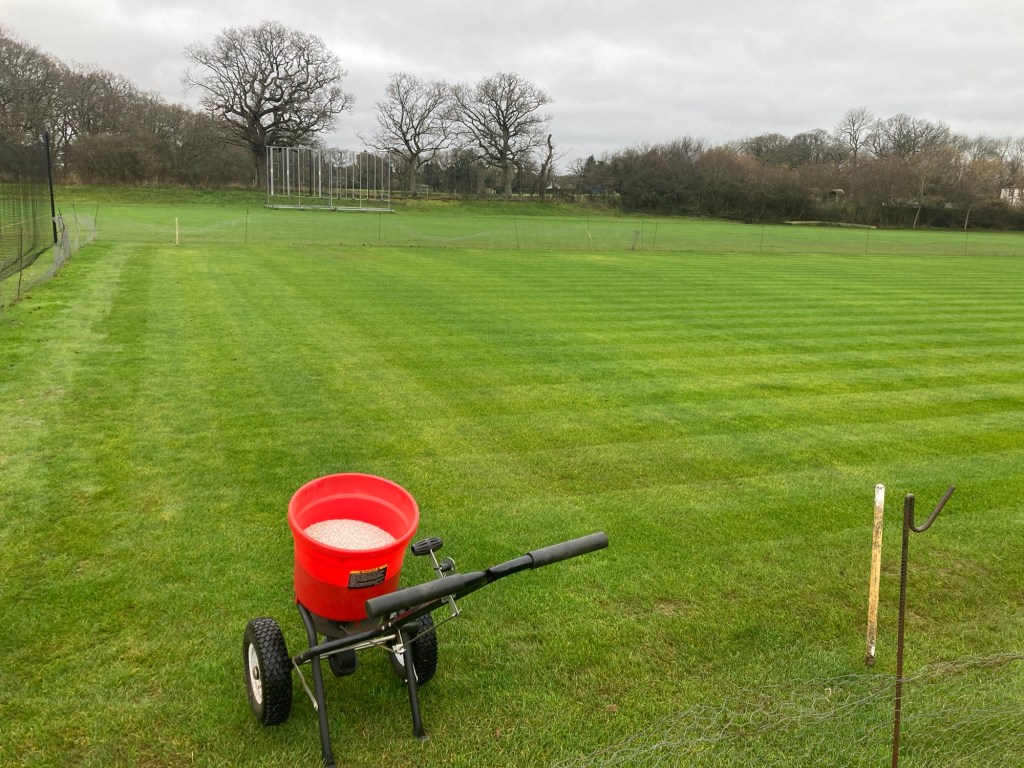
Nutrition
Requires grass growth, so if its not growing its probably be a waste of time feeding!
Apply autumn /winter fertiliser, a touch of Fe (iron) included will help keep moss at bay and help hold off disease.
The more vigorously the grass grows the more fertiliser inputs are required, specifically nitrogen. Red thread turf disease is also a indicator of a plant depleted of nitrogen. It is advised to go onto a spring/summer type fertiliser once the square is growing and being cut on a regular basis, often from around March.
Fertiliser requirements of a square, ideally should be based on annual soil nutrient testing results carried out in the early part of the year.
Soil Testing
Early in the year is the best time to test the nutrient reserves of the soil, in doing so it will help you plan for the rest of the year. There is no point applying nutrients the plant doesn’t need; test kits are cheaply available and can be interpreted by a FACTs based advisor (person who sells you your fertiliser).
Sarel Rolling
Is a form of shallow spiking there be no form of aeration, but the sarel holes will create holes for seed placement during periods of over seeding and can be used throughout the year when the soil is soft enough to penetrate.
Worm Caste Management
If the grass grows well, manage ideally by cultural management techniques, such as drag matting and brushing when the castes are at their driest.
Machinery Servicing
Machinery servicing is absolutely vital along with monthly start-ups of machines. Get those machines done to avoid a spring rush. Keep fuel level low and diesel levels at their highest during winter.
Next Month task wise could really increase, with the start of pre season rolling, more regular cutting so getting machines serviced before then will prevent down time, when you need the machine most.
Click below for more from Brian @ Turf Care Blog


